
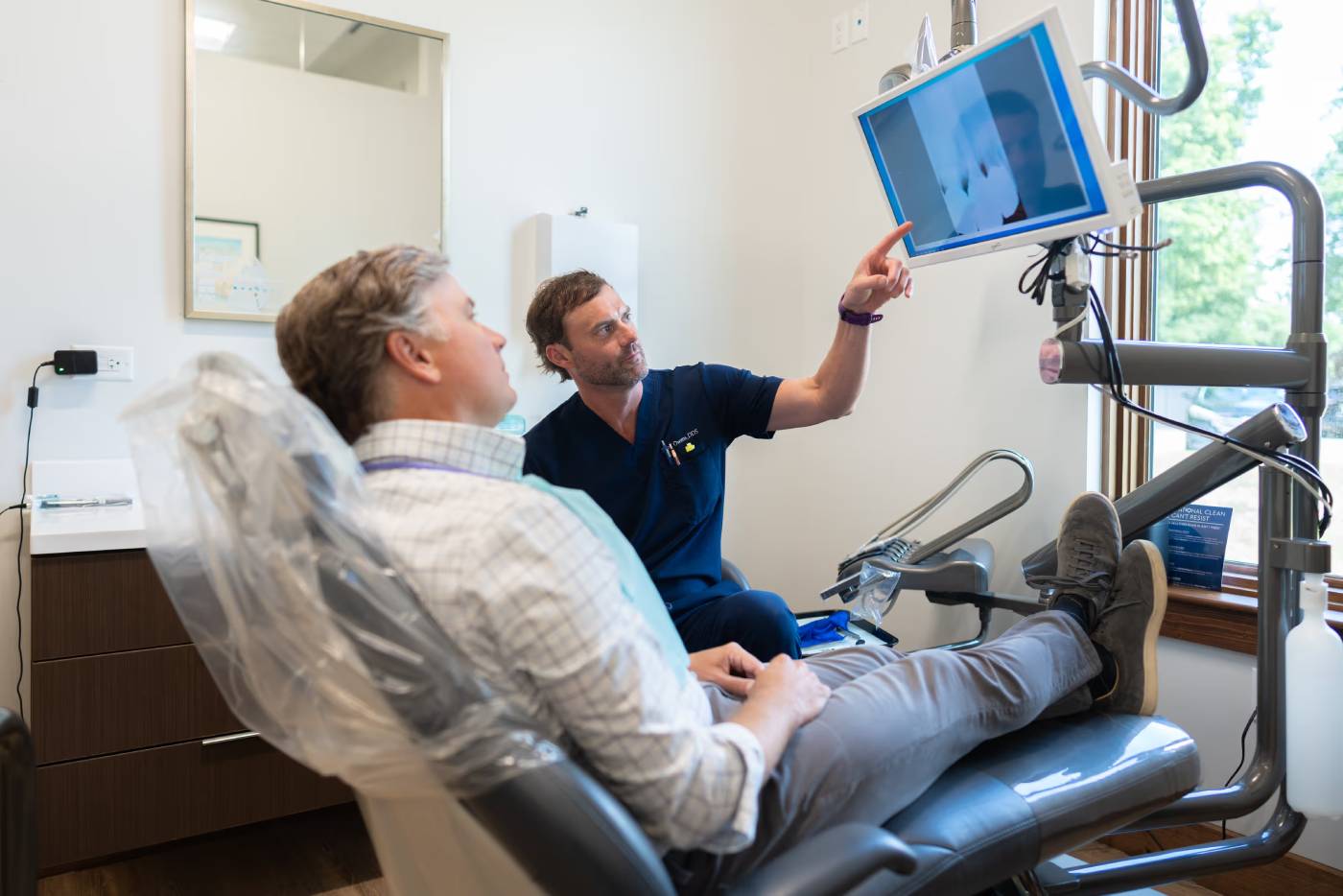
Digital and traditional dentures do the same job; the difference is how they are made. Traditional dentures start from putty impressions and wax models. Digital dentures start from a 3D scan, are designed on a computer and milled, and usually fit closer with fewer adjustments.
If you have worn dentures for years, you probably remember the trays of impression material and the rounds of sore-spot appointments that followed. Digital workflows were developed to cut down on exactly that. Here is what changes and what stays the same, so you can decide which approach fits you.
How Are Traditional Dentures Made?
Conventional dentures are built through a series of physical steps, each of which passes a model from the office to a lab and back.
Impressions and Models
The process begins with trays of soft impression material pressed against the gums and held until it sets. Those impressions are poured in stone to create models of your mouth. Many people find this the least pleasant part, especially anyone with a strong gag reflex.
Bite Records, Wax Try-Ins and Adjustments
Next come bite records and a wax try-in, where you see a trial version of the teeth before the final denture is processed. After delivery, small pressure points often show up once you start eating and speaking normally, and each one means a return visit for adjustment. Done well, conventional dentures work. The weak point is that every manual step adds a small chance of distortion.
How Are Digital Dentures Made?
At Kidder Owens Dental, digital dentures follow a four-step process that replaces the physical molds with digital data.
1. Digital Scanning
Instead of impression trays, the team uses digital scanning technology to build a precise 3D model of your mouth. For most people this is quicker and far more comfortable than biting into putty.
2. Computer-Aided Design
Using computer-aided design (CAD) software, the denture is designed around your bite, your jaw structure and the look you want. Tooth shape, size and position can be adjusted on screen before anything is made.
3. Milling and Fitting
The finished digital file is used to mill the denture from a high-quality material for strength and fit. When it is ready, the team checks the fit and makes any adjustments. The practice notes that, because of the digital design process, adjustments are minimal compared to traditional dentures.
4. Records Kept on File
Your digital records stay on file. If a denture is lost or damaged, it can be remade from that file without starting over.
Digital vs. Traditional Dentures: How Do They Compare?
This table sets the two side by side on the points patients ask about most.
| Traditional dentures | Digital dentures | |
|---|---|---|
| How your mouth is recorded | Putty impressions in trays | 3D digital scan |
| How the denture is designed | Wax models built by hand | CAD software, previewed on screen |
| How it is made | Processed from the wax model | Milled from the digital file |
| Fit at delivery | Often needs several adjustment visits | Precise fit; adjustments usually minimal |
| Replacing a lost denture | New impressions and a new process | Remade from records on file |
| Lifespan | Depends on fit, care and changes in the jaw | Five to ten years or longer with proper care |
| Can implants be added later? | Sometimes, often needs a new denture | Yes, can be converted to implant-supported |
The lifespan figure is the one the practice gives for digital dentures. Any denture’s life also depends on how the bone and gums underneath change over time.
Are Digital Dentures Better Than Traditional Dentures?
For most patients the digital process offers real advantages. The practice lists a faster turnaround, a better fit with fewer sore spots, stronger and more wear-resistant materials, natural-looking teeth and easy replacement as the main benefits.
Where Digital Dentures Stand Out
- Comfort during the process, since a scan replaces trays of impression material
- Fewer appointments, which the practice says is typical compared to the conventional method
- Consistency, because the design is stored and can be reproduced exactly
- Planning the look, since tooth shape and shade can be refined digitally before milling
What Digital Dentures Do Not Change
A digital denture is still a removable denture resting on your gums. It does not stop the bone loss that follows tooth loss, and over time the fit can loosen as the ridge underneath changes. Regular checkups keep it fitting well. If stability while eating is your main frustration, the bigger change comes from adding implants, not from the way the denture is made.
Who Is a Good Candidate for Digital Dentures?
According to the practice, digital dentures suit:
- Patients who need a full or partial denture
- People who want a more precise, comfortable alternative to traditional dentures
- Anyone who wants a shorter wait for new dentures
- Patients who want easy replacement if a denture is lost or damaged
- People considering implant-supported dentures in the future
What If You Have Bone Loss?
Long-term tooth loss often leaves the jaw ridge thinner, which can make any denture harder to keep in place. Where that is the case, the practice may recommend bone grafting before the denture is made.
Partial vs. Full
Digital dentures are made both as full dentures, for an arch with no remaining teeth, and as partials that fill gaps around healthy teeth. If you only need to replace one or two teeth, a bridge or an implant may be worth comparing too. Our guide to implants, dentures and bridges walks through those options.
Can You Switch to Implant-Supported Dentures Later?
Yes. The practice notes that digital dentures can later be secured on implants if you decide you want more stability. That makes a digital denture a reasonable first step for someone who is not ready for implant surgery yet but wants to keep the option open.
How Implant-Supported Dentures Differ
Implant-supported dentures snap onto implants placed in the jaw, so they do not rely on suction or adhesive. Because the implants stimulate the bone, they also help preserve the jaw over time. For a fixed full arch, All-on-4 uses four implants to hold a complete set of teeth. Our comparison of All-on-4 and implant-supported dentures explains how those two differ.
Caring for Digital Dentures
Care is much the same as for any denture. Clean it daily, handle it over a soft surface so a drop does not crack it, and keep your gums and any remaining teeth clean. Routine cleanings and exams let the team catch fit changes early, and because your records are digital, an update or remake is simpler when the time comes.
Frequently Asked Questions
How long do digital dentures last?
The practice states that digital dentures can last five to ten years or longer with proper care, with routine checkups helping to maintain fit.
Do digital dentures look natural?
Yes. They are made from materials that closely match the colour, shape and translucency of natural teeth, and the design can be adjusted before milling.
How quickly can I get digital dentures?
Usually faster than the traditional route, often with fewer appointments. Exact timing depends on your treatment needs, including whether any extractions or grafting come first.
Can my old dentures be scanned to make new ones?
That is a good question to bring to your consultation. The team will look at your current dentures and your mouth and explain how they would approach the new set.
Talk to Us About Digital Dentures in Baton Rouge
If your current dentures do not fit well, or you are facing dentures for the first time, a consultation is the best place to start. Request an appointment or call (225) 761-8585 to talk with the doctors at Kidder Owens Dental about digital dentures and whether implants could be part of your plan.