
Why Choose a Dental Bridge?
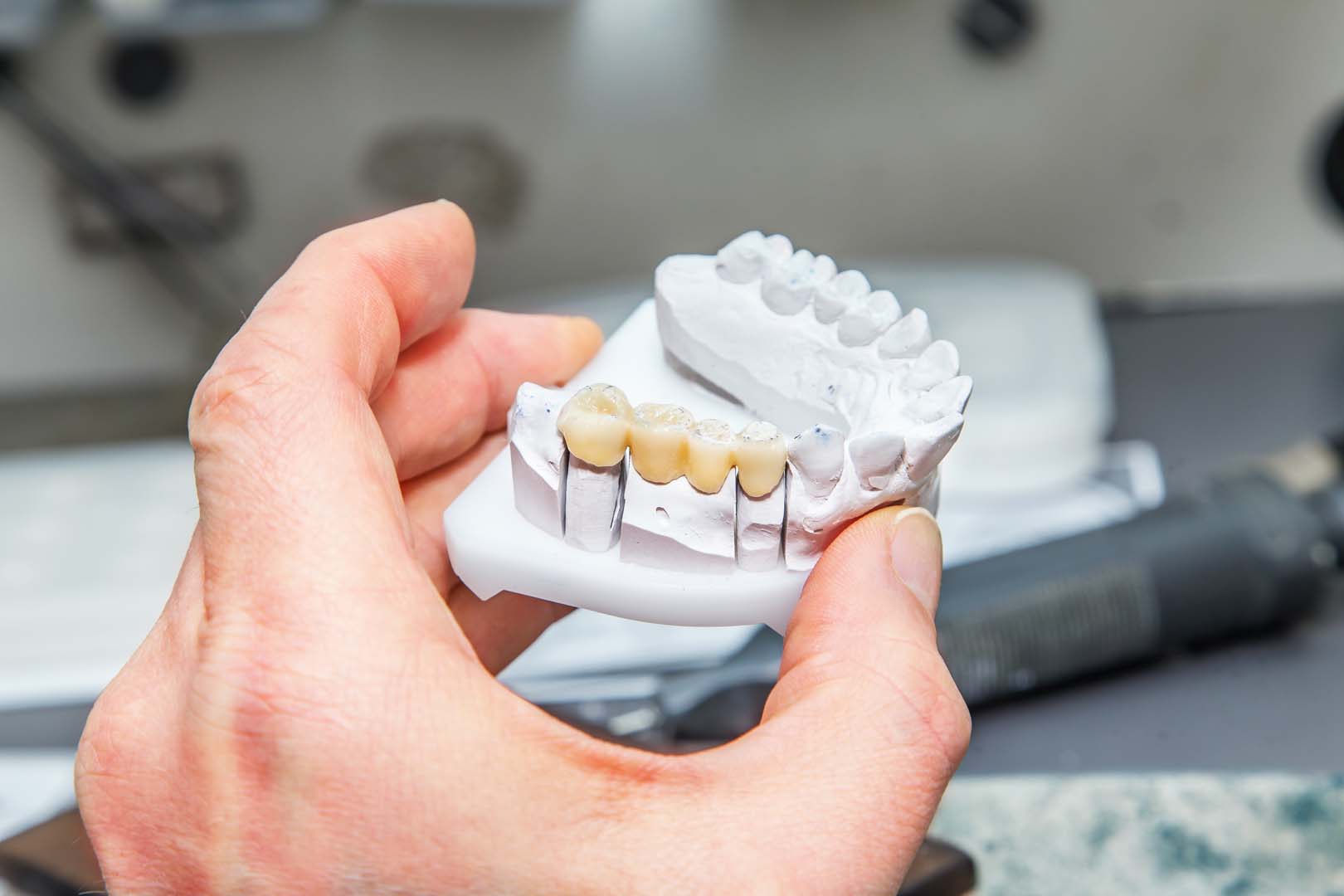
A dental bridge is a fixed restoration that fills the gap left by missing teeth. It is anchored in place using natural teeth or dental implants, providing a stable and long-lasting solution.
Key Benefits of Dental Bridges
- Restores Chewing and Speaking Ability – Replacing missing teeth helps improve speech and allows you to eat comfortably.
- Prevents Teeth from Shifting – Keeps surrounding teeth in place and maintains proper bite alignment.
- Enhances Smile Appearance – Fills in gaps for a seamless, natural look.
- Long-Lasting Solution – With proper care, a dental bridge can last 10–15 years or more.
- Non-Removable & Secure – Unlike removable dentures, a bridge stays fixed in place for everyday convenience.
For patients with significant bone loss, bone grafting may be recommended to strengthen the jaw before placing a bridge or dental implant.
What to Expect When Getting a Dental Bridge
1. Comprehensive Evaluation
Your journey begins with a detailed consultation, where we assess your oral health using digital X-rays and 3D imaging to determine if a dental bridge is the best solution for your missing teeth.
2. Tooth Preparation & Impressions
If your bridge is supported by natural teeth, they are gently reshaped to accommodate the crowns that will anchor the bridge. A digital impression is then taken to create a custom-fit restoration.
3. Custom Bridge Fabrication
Your bridge is designed to match the colour, shape, and size of your natural teeth. It is made from durable, high-quality materials such as ceramic or porcelain for a strong and natural appearance.
4. Bridge Placement & Adjustments
Once the bridge is ready, it is permanently bonded in place. We ensure a comfortable fit and proper bite alignment, making any necessary adjustments.
5. Long-Term Care & Maintenance
With regular dental checkups and cleanings, your bridge can remain strong and functional for many years. We recommend dental cleanings and exams every six months to maintain your bridge and overall oral health.
Types of Dental Bridges
Depending on your specific needs, we offer different types of dental bridges:
- Traditional Bridge – The most common type, anchored by dental crowns on natural teeth.
- Implant-Supported Bridge – Uses dental implants instead of natural teeth for added stability and longevity.
- Cantilever Bridge – Supported on one side when only one adjacent tooth is available for anchoring.
- Maryland Bridge – A conservative option that uses a metal or porcelain framework bonded to the back of adjacent teeth.
If you are missing an entire row of teeth, implant-supported dentures or All-on-4 implants may be a better solution.
Who Needs a Dental Bridge?
A dental bridge is an ideal option for patients who:
- Are missing one or more teeth in a row
- Want a fixed, non-removable tooth replacement
- Are not candidates for dental implants due to bone loss or other concerns
- Want to improve their smile aesthetics and bite function
- Need to prevent neighbouring teeth from shifting
If you experience jaw pain or misalignment, TMJ therapy may also be recommended alongside your bridge treatment.
Why Choose Kidder Owens Dental for Dental Bridges?
At Kidder Owens Dental, we are committed to restoring your smile with precision and care.
What Sets Us Apart?
- Experienced Dental Team – Dr. Dustin Kidder Dr. Elizabeth Kidder and Dr. Sean Owens specialize in restorative treatments, including bridges.
- Advanced Technology – We use digital impressions and 3D imaging for precise, custom-fit restorations.
- Metal-Free, Natural-Looking Bridges – Our ceramic and porcelain bridges blend seamlessly with your smile.
- Comprehensive Dental Care – From ceramic crowns to full mouth reconstruction, we provide complete smile restoration solutions.
- Comfort-Focused Approach – We offer sedation dentistry for anxious patients undergoing treatment