
Not always. Pain is a poor guide, because impacted or partly erupted wisdom teeth can damage nearby teeth, trap bacteria or form cysts without hurting. Whether one should come out depends on its position, the space available and how well you can clean it.
Plenty of adults are told their wisdom teeth “should probably come out” and put it off because nothing feels wrong. Others assume that if a tooth never bothered them, it never will. Both can be true for different people. Here is what a dentist looks at when the teeth are quiet.
Why Can Wisdom Teeth Cause Problems Without Pain?
Wisdom teeth, or third molars, usually arrive between the ages of 17 and 25, and most mouths do not have enough room for them. When a tooth cannot fully emerge, it stays partly or completely under the gum and bone. That is called impaction.
Many of the problems an impacted tooth causes develop slowly. A tooth pushing against the molar in front of it can wear into that tooth’s root. A flap of gum over a partly erupted tooth can hold food and bacteria for years before it becomes infected. The practice also notes that impacted wisdom teeth can lead to cysts or damage to the surrounding bone. None of these has to hurt early on, which is why they are usually found on X-rays rather than by feel.
What Does an X-Ray Show That You Cannot Feel?
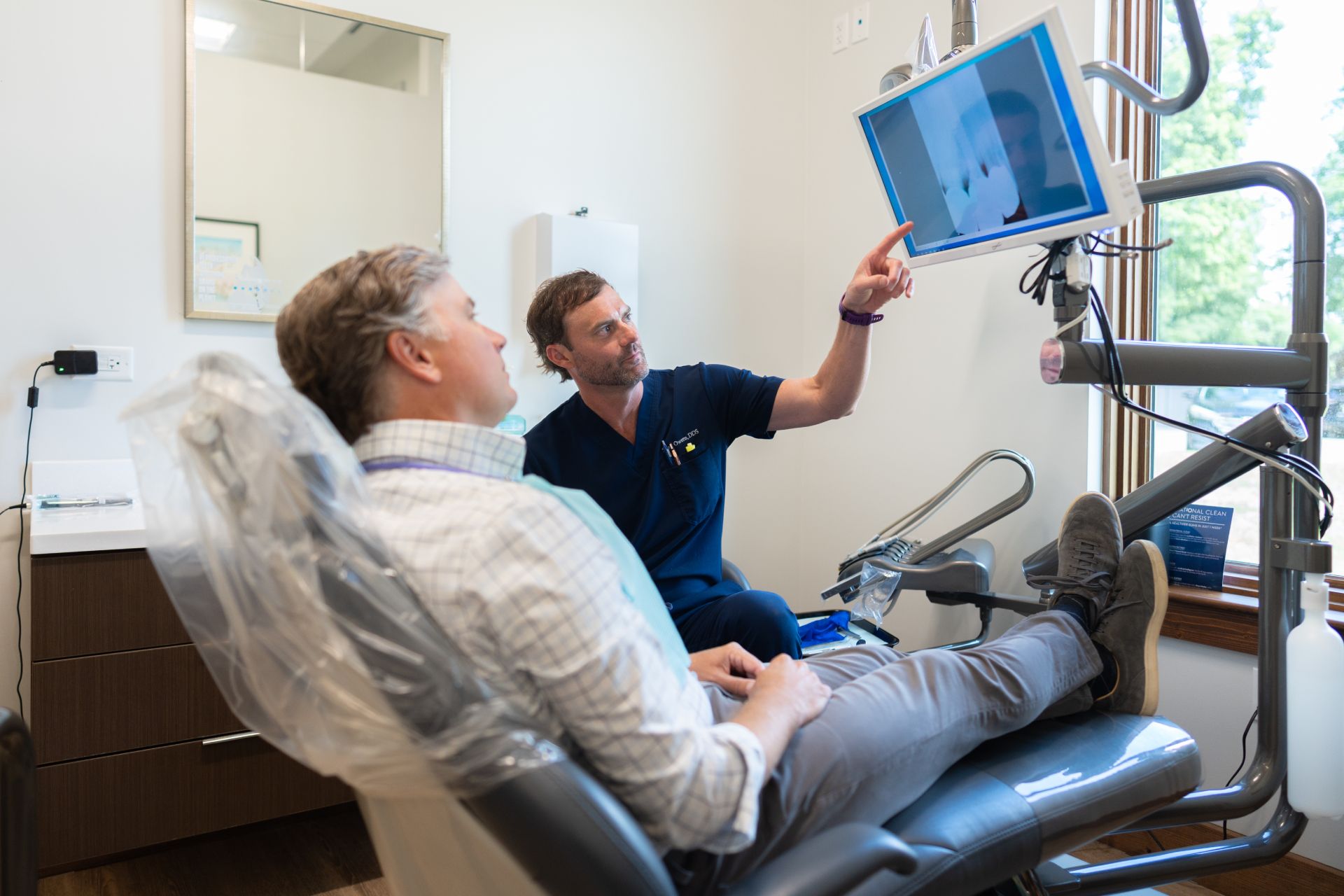
A wisdom tooth evaluation at Kidder Owens Dental starts with an exam and digital X-rays to see the position of each tooth. The images answer several questions at once:
- Has the tooth fully erupted, or is it partly or completely under the gum and bone?
- Is it growing straight up, or tilted toward the neighboring molar?
- Is there any sign of decay on the wisdom tooth or the tooth in front of it?
- Is there a dark area around the crown that could suggest a cyst?
- How close are the roots to nearby structures?
Regular cleanings and exams give the team a chance to keep checking wisdom teeth over time, with X-rays when needed, rather than relying on symptoms.
When Is Removal Usually Recommended?
According to the practice, wisdom teeth removal is recommended for people with impacted teeth that cause pain, swelling or infection, for those with crowding who want to avoid future alignment problems, and for anyone with partly erupted teeth at risk of decay and gum disease. Removal may also be advised before orthodontic treatment to help prevent teeth from shifting.
Even without pain, these warning signs are worth an evaluation:
- Swelling, tenderness or bleeding in the gums at the back of the mouth
- Difficulty opening your mouth fully
- Persistent bad breath or a bad taste near the back teeth
- A feeling of pressure, or front teeth that seem to be shifting
When Might Monitoring Be Reasonable?
Some wisdom teeth come in fully, sit upright, meet the opposing teeth and can be brushed and flossed like any other molar. When X-rays show no impaction, decay, gum problems or changes around the tooth, your dentist may suggest keeping an eye on it instead of removing it.
Monitoring is not the same as ignoring. It means checking the teeth at routine visits and repeating X-rays when the dentist thinks they are needed. If anything changes, the conversation about removal starts again. Wisdom teeth are hard to reach, so a tooth that is easy to clean today can become a problem if gums recede or home care slips.
What Happens If a Problem Wisdom Tooth Is Left Alone?
The practice is direct about the risks: impacted wisdom teeth can lead to infection, damage to nearby teeth and misalignment, which is why removal is often recommended before complications arise. Partly erupted teeth are especially hard to keep clean, so cavities and gum infections are common around them.
The tooth most often affected is the second molar just in front. If decay or bone loss reaches that tooth, the fix can involve a filling, a crown or even losing a tooth you actually need for chewing. Swelling at the back of the jaw that comes with a fever or trouble swallowing means going to the nearest emergency room or calling 911 first, and the practice’s emergency dental care page explains when to call the office instead.
How Do You Keep Monitored Wisdom Teeth Healthy?
If your dentist agrees that a wisdom tooth can stay for now, the job is to keep it as clean as the rest of your mouth. A brush with a small head reaches the back of the arch more easily, and angling it toward the gumline behind the last molar helps clear food from the spot most people miss. Floss the space between the wisdom tooth and its neighbor every day.
Keep your six-month visits so changes are spotted early, and call sooner if you notice any of the warning signs above. A wisdom tooth that stays quiet for years is a fine outcome; the point of monitoring is to make sure it really is quiet.
Remove or Monitor: How Do the Options Compare?
This summary reflects what the practice publishes about wisdom teeth and the general reasoning dentists use.
| Factor | Leaning toward removal | Leaning toward monitoring |
|---|---|---|
| Position | Impacted or tilted into the next molar | Fully erupted and upright |
| Cleaning | Partly covered by gum, hard to reach | Can be brushed and flossed well |
| X-ray findings | Decay, bone changes or signs of a cyst | No changes from one check to the next |
| Crowding or orthodontic plans | Crowding present or treatment planned | Enough space, stable bite |
| Gum health | Swollen, tender or bleeding gums around the tooth | Healthy gums around the tooth |
Does Age Change the Decision?
Timing matters. The practice lists teens and young adults with developing wisdom teeth among those who should consider removal, and states that removing wisdom teeth early can prevent future complications. Problems that build quietly over years, such as damage to the neighboring molar, are easier to avoid than to repair.
Adults can still have wisdom teeth removed. For an adult, the decision rests on what the X-rays show now and how the tooth has behaved, rather than on age alone. Your dentist will weigh the benefit of removing the tooth against simply watching it.
What Is Removal Like If You Need It?
A fully erupted wisdom tooth may be a simple extraction, lifted out with forceps. An impacted tooth needs a surgical extraction, in which a small incision in the gum allows the tooth to be removed. At Kidder Owens Dental, Dr. Sean Owens focuses on surgical care, including wisdom tooth removal.
Comfort options include local anesthesia, nitrous oxide, oral sedation and IV sedation, which the practice recommends for anxious patients or complex extractions. You can read more on the sedation dentistry page. The practice notes that most people recover within three to five days and that full healing takes about one to two weeks. Our extraction recovery timeline covers the first days in more detail.
Frequently Asked Questions
Can wisdom teeth cause crowding of my front teeth?
The practice lists crowding and misalignment among the problems wisdom teeth can cause when there is not enough room, and notes that removal may be advised before orthodontic treatment.
Is it harder to remove wisdom teeth later in life?
Every case is different. The practice recommends earlier removal to prevent complications, so if your dentist has flagged a tooth, it is worth discussing timing rather than waiting for symptoms.
Do all four wisdom teeth have to come out at once?
Not necessarily. The plan depends on which teeth are causing or likely to cause problems, which your exam and X-rays will show.
Will insurance cover wisdom teeth removal?
The practice notes that many plans partially or fully cover it, and the team will review your benefits and financing options before treatment.
Find Out What Your Wisdom Teeth Are Doing
A quick exam and X-rays can tell you whether your wisdom teeth need attention now, later or not at all. Learn more about wisdom teeth removal, then request an appointment or call (225) 761-8585 to schedule an evaluation with Kidder Owens Dental.