
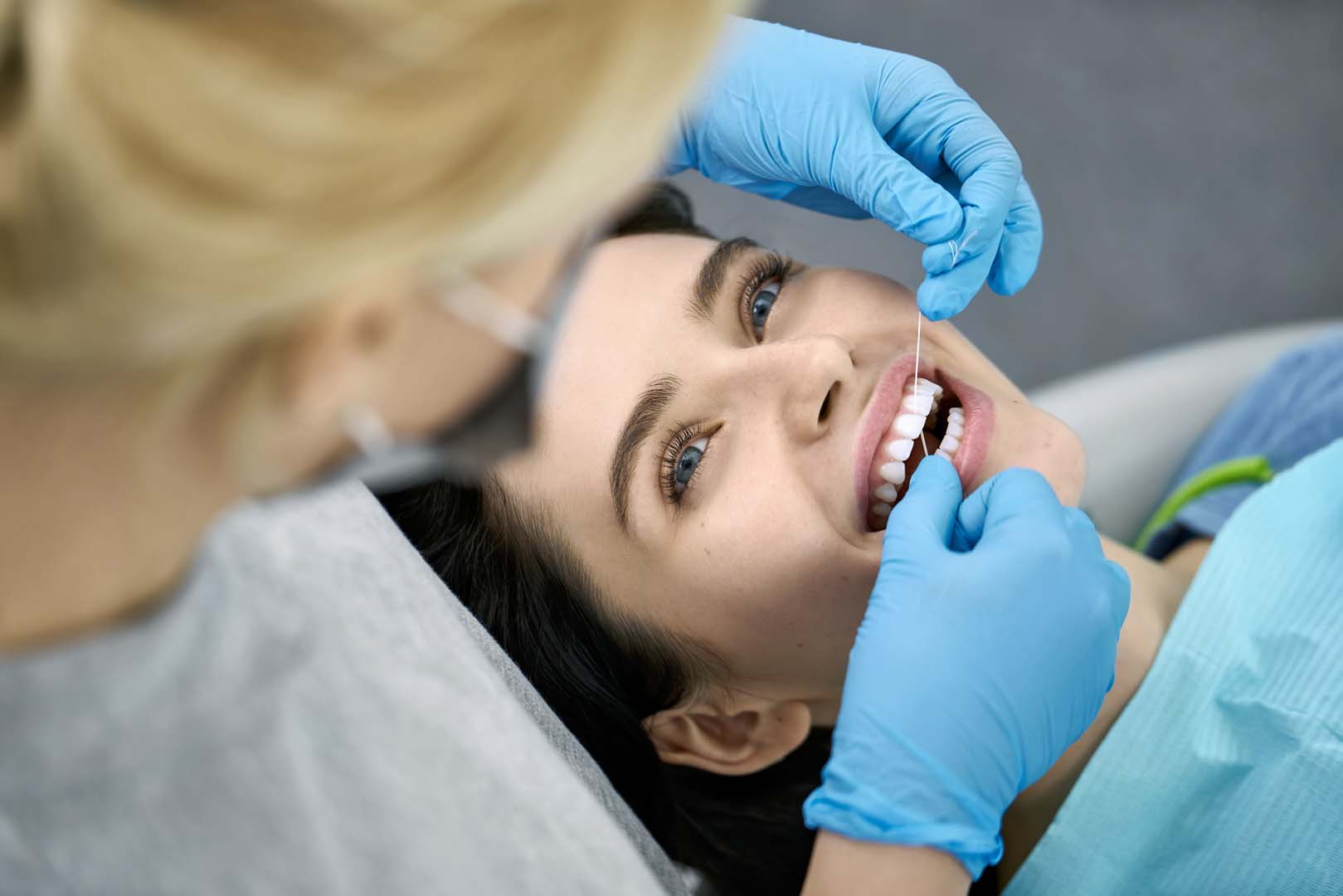
Most people first hear about fluoride treatment as a kid — the flavored gel in a tray at the end of a cleaning. What surprises a lot of adults is that professional fluoride is not a children’s-only service, and that the people who benefit from it most are often adults with dry mouth, gum recession, crowns and bridges, or a history of repeat cavities.
At Kidder Owens Dental in Baton Rouge, Dr. Dustin Kidder, Dr. Sean Owens, and Dr. Elizabeth Kidder use professional fluoride as a targeted preventive tool rather than a default add-on. This guide explains what it actually does to enamel, who genuinely needs it, how often it should be repeated, and how it fits alongside the rest of your preventive care.
What Professional Fluoride Actually Does to Your Teeth
Tooth enamel is in a constant tug-of-war. Every time you eat or drink something acidic or sugary, bacteria in plaque produce acid that pulls calcium and phosphate out of the enamel surface — a process called demineralization. Between meals, your saliva does the reverse and puts minerals back.
A cavity forms when the losing side wins for long enough. Fluoride changes the math in two ways: it makes remineralization happen faster, and it helps rebuild the enamel surface into a form that is more acid-resistant than the original mineral. It also interferes with the bacteria’s ability to produce acid in the first place.
Toothpaste and tap water deliver fluoride at low concentration many times a day. A professional treatment does something different — a short, high-concentration application that leaves a reservoir of fluoride on and just under the enamel surface. That is why a treatment that takes a few minutes in the chair can keep working for months, and why it is worth doing even if you already brush with a fluoride toothpaste twice a day.
Who Actually Needs Professional Fluoride?
Children are the obvious group. Newly erupted permanent teeth have enamel that has not fully hardened yet, and the deep grooves on new molars collect plaque faster than a child’s brushing can clear it. That is also why dental sealants and fluoride are often recommended together for kids — the sealant physically blocks the grooves while the fluoride strengthens everything around them.
The adults who benefit most usually have one of these risk factors:
- Dry mouth. Less saliva means less natural remineralization. Dry mouth is extremely common as a side effect of blood pressure medication, antidepressants, antihistamines, and diuretics.
- Gum recession or exposed roots. Root surfaces are covered in cementum and dentin, not enamel, and they decay considerably faster than the crown of the tooth.
- A recent run of cavities. Two or more new cavities in a couple of years is a pattern, not bad luck. Fluoride addresses part of that pattern while we look at the rest.
- Crowns, bridges, or implant restorations. Decay does not affect the restoration itself, but the natural tooth margin where it meets your tooth is a common failure point.
- Orthodontic treatment. Brackets and wires create dozens of new places for plaque to sit. Even patients in clear aligner treatment spend hours a day with teeth bathed in whatever is inside the tray.
- Frequent sipping. It is not the total sugar that drives decay so much as the number of separate acid attacks. A single dessert is far less damaging than a sweet tea nursed over three hours.
If none of those describe you and your exam history is clean, we will tell you that fluoride is optional for you rather than sell you on it.
How Often Should You Get Fluoride Treatment?
The honest answer is that frequency should follow risk, not the calendar.
For most children and for adults with an active risk factor, applying fluoride at each six-month cleaning and exam is the standard interval. For higher-risk patients — significant dry mouth, root exposure, several recent cavities — a three- or four-month recall with fluoride at each visit is more appropriate, because the protective effect fades over months rather than lasting a year.
For low-risk adults with no recession, no dry mouth, and no new decay in years, skipping the professional application and relying on fluoride toothpaste is a reasonable choice. What matters is that the decision is made deliberately at your exam, based on what your mouth looks like that day.
We also use prescription-strength home fluoride in some cases — a higher-concentration toothpaste or a gel used in a tray at night. That is usually reserved for patients whose risk is high enough that twice-yearly in-office applications are not enough on their own, and it is meant to work alongside your treatments, not replace them.
What a Fluoride Treatment Visit Is Actually Like
There is very little to it, which is part of the point.
The application usually comes at the end of your cleaning, once the tooth surfaces are free of plaque and the fluoride can reach the enamel directly. We dry the teeth, apply the fluoride — most often a varnish painted on with a small brush, sometimes a foam or gel in a tray — and let it set. The whole step takes a few minutes and involves no drilling, no needles, and no discomfort beyond a slightly sticky feeling on the teeth.
Varnish sets on contact with saliva, so you can talk and drink normally almost immediately. We will ask you to hold off on hot drinks, alcohol-based mouthwash, and hard or crunchy foods for a few hours, and to skip brushing until that evening so the fluoride has uninterrupted contact time. Skip that last part and you have washed off much of what you came in for.
Some patients notice a temporary film or a slight yellow tint from varnish. It brushes off completely the next day.
Is Fluoride Treatment Safe?
Professional fluoride has one of the longest safety records in preventive medicine, and the dose in a single in-office application is small and controlled. The concerns that circulate online are almost always about swallowing fluoride over long periods at high concentrations, not about a topical application that stays on the tooth surface.
The one genuine, well-documented risk is dental fluorosis — faint white flecking or streaking in enamel — and it happens only while permanent teeth are still forming under the gums, generally before about age eight, and only with excessive total intake over time. That is exactly why we ask young children to spit rather than swallow, why toddler toothpaste amounts are measured in smears rather than ribbons, and why we ask what your household water situation looks like before recommending anything additional.
If you have questions about fluoride for your child specifically, bring them to the appointment. It is a fair question and it deserves a real answer with your child’s teeth in front of us, not a generic one.
Does Insurance Cover It?
Most dental plans cover fluoride application for children as a straightforward preventive benefit, usually once or twice per year. Adult coverage is less consistent — some plans cover it only with a documented medical or clinical reason, and some exclude it by age regardless of risk.
When adult fluoride is not covered, it is typically a small out-of-pocket cost relative to what a single filling runs, which is a large part of why we recommend it for higher-risk patients even without benefits. Our team will check your plan before your visit so the answer comes from your actual coverage rather than a guess, and we offer flexible payment options for the rest of your care.
Where Fluoride Fits in the Bigger Picture
Fluoride is one part of preventive dentistry, not a substitute for the rest of it. It strengthens enamel; it does not remove the plaque and tartar already on your teeth, it does not address the cause of dry mouth, and it does not fix the grinding habit that is wearing your enamel thin.
A preventive plan that actually works usually combines a few of these:
- Professional cleanings and exams at an interval matched to your risk
- Sealants on deep grooves, especially for children’s molars
- Fluoride at whatever frequency your risk profile calls for
- An oral cancer screening as part of every routine exam
- Fixing early decay while it is still a small filling rather than a crown or an extraction
Talk to Us About Whether You Need Fluoride
If you have had more cavities than you expect for how well you take care of your teeth, if your mouth is always dry, or if you are not sure whether your kids are getting what they need, that is a five-minute conversation at your next visit.
Call Kidder Owens Dental at (225) 761-8585 or request an appointment at our office at 9420 Perkins Rd in Baton Rouge. You can also read more about professional fluoride treatment and the rest of our general dentistry services.