
Most adults complete Invisalign in 12 to 18 months, though mild cases can finish in as little as 6 months and complex cases may take 24+ months. Invisalign uses a series of clear, removable aligners that gradually shift your teeth into position, with each tray worn for 1 to 2 weeks. It’s an FDA-cleared orthodontic system designed for teens and adults who want a discreet way to straighten their smile.
At Kidder Owens Dental, your timeline depends on the complexity of your case, how consistently you wear your aligners, and how your teeth respond to treatment. Dr. Dustin Kidder, DDS, FAGD, builds every plan around your specific bite, goals, and lifestyle. The result is a clear plan with predictable check-ins from your first scan to your final retainer.
What Is Invisalign and How Long Does It Take for Adults?
Invisalign is a clear aligner system that straightens teeth without metal brackets or wires. Instead of fixed hardware, you wear a sequence of custom-made plastic trays that apply gentle, controlled pressure to move teeth a little at a time. Each tray is engineered from a digital model of your mouth, so movement is mapped out before you ever begin.
For most adults, treatment runs 12 to 18 months. Simpler cases involving minor crowding or small gaps can wrap up in as few as 6 months, while complex bite corrections may extend beyond 24 months. The reason for that range comes down to how much your teeth need to move and how reliably you keep the trays in place.
Adults tend to gravitate toward Invisalign because it fits real life. The trays come out for meals and brushing, they’re nearly invisible in conversation, and check-ins happen less often than with braces. Dr. Dustin Kidder reviews your bite, your goals, and your daily routine before confirming whether the system is the right path for your smile, then sets a realistic finish date you can plan around.
How Invisalign Works: A Month-by-Month Timeline
Invisalign treatment follows a predictable sequence. While every smile is different, here’s what most adult patients can expect from start to finish.
What Happens During Your First Visit and 3D Scan?
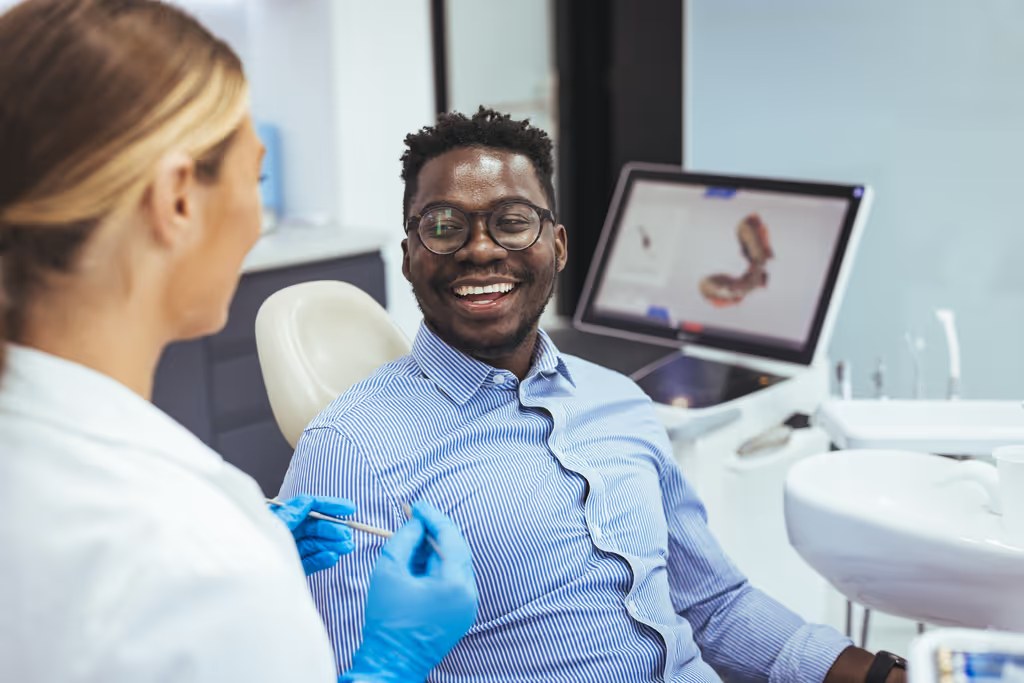
Your first visit includes a thorough exam, digital impressions using a 3D scanner, and a personalized treatment plan. You’ll see a digital preview of your projected smile before any aligners are made. This is also when Dr. Dustin reviews your bite, discusses your goals, and confirms Invisalign is the right fit.
When Are Your First Aligners Fitted?
You’ll receive your first set of aligners along with instructions on wear and care. Small tooth-colored attachments may be bonded to certain teeth to help guide movement. The first few days bring mild pressure as your teeth begin to shift, but most patients adjust within a week.
What Progress Can You Expect in Months 2-3?
Months two and three bring the first clearly visible results. By the second month, many patients notice subtle changes in tooth position. You’ll swap to a new tray every 1 to 2 weeks, following the schedule your personalized treatment plan provides. Quick check-ins keep treatment moving smoothly.
What Adjustments Happen at Mid-Treatment?
Around the halfway point, Dr. Dustin reviews your progress and confirms your teeth are tracking with the digital plan. If a tooth isn’t moving as predicted, a mid-course correction or new scan may be ordered. Most cases stay right on schedule.
What Are the Final Months Like?
The final phase focuses on refinement and retention. The last several trays focus on refining tooth position, closing small gaps, and perfecting your bite. Attachments are removed once active treatment ends. You’ll transition into retainers, which are essential for keeping your new smile in place long-term.
A note on wear time
Aligners must stay in for 20 to 22 hours per day. Skipping hours adds weeks to your timeline.
Benefits of Choosing Invisalign as an Adult
Adult patients often choose Invisalign for reasons that go beyond aesthetics. The features below tend to matter most to busy professionals and anyone who values discretion:
- Nearly invisible aligners. Clear trays blend in during meetings, presentations, and social events.
- Removable for eating and hygiene. Take them out to enjoy meals, then brush and floss normally.
- Fewer in-office visits. Most patients check in every 6 to 8 weeks rather than monthly.
- No metal brackets or wires. Smooth plastic edges mean less cheek and gum irritation.
- Digital smile preview. See your projected result before committing to treatment.
For many adults, the combination of comfort and convenience makes Invisalign the practical choice for straightening teeth without disrupting daily life.
Invisalign vs. Braces: Timeline and Treatment Comparison
Both Invisalign and traditional braces can produce excellent results. The right choice depends on your bite, your lifestyle, and your preferences.
| Feature | Invisalign | Traditional Braces |
|---|---|---|
| Average treatment time | 12-18 months | 18-24 months |
| Visibility | Clear, nearly invisible | Visible metal or ceramic |
| Comfort | Smooth plastic edges | Brackets and wires |
| Removability | Removable for meals and cleaning | Fixed in place |
| Visit frequency | Every 6-8 weeks | Every 4-6 weeks |
| Best for | Mild to moderate cases | Severe bite or alignment issues |
| Food restrictions | None | Several |
For very complex skeletal bite problems or significant rotations, braces may still be the better option. For most adult cases involving crowding, gaps, or mild to moderate bite correction, Invisalign delivers comparable results with greater flexibility.
Factors That Affect Your Invisalign Timeline and Cost
What affects Invisalign cost and timeline? Three things drive both: how much your teeth need to move, how faithfully you wear your aligners, and how your bone responds at your age. Together these determine the number of trays you’ll need and the total length of treatment, which in turn shape the overall investment.
Case complexity
Mild crowding or small gaps move faster than significant rotations, deep bites, or severe spacing. The more movement required, the more aligners you’ll need.
Daily wear consistency
Invisalign only works when it’s in your mouth. Patients who wear their aligners the recommended 20 to 22 hours per day stay on track. Skipping hours, even occasionally, can push your timeline back by weeks or months.
Age and bone density
Adult teeth move through bone that’s denser than a teenager’s, which can slow movement slightly. This is normal and factored into your plan.
Refinements
Many cases include a refinement phase, a short second round of aligners to perfect the final result. Refinements are common and built into most treatment plans.
Number of aligners
Shorter cases may use 14 to 20 trays. Complex cases can require 40 or more.
Cost generally scales with complexity and treatment length. Kidder Owens Dental offers flexible financing and online payment options to make treatment manageable.
Are You a Good Candidate for Invisalign?
Invisalign works well for most adults, but a quick checklist helps clarify whether it’s the right fit for you. So how do you know? Run through these points:
- Mild to moderate alignment issues. Crowding, spacing, crossbites, overbites, and underbites all respond well.
- Healthy teeth and gums. Cavities and gum disease must be treated before starting orthodontic care.
- Commitment to consistent wear. Aligners need to be in your mouth 20 to 22 hours daily.
- Realistic expectations. Severe skeletal bite problems may require traditional braces or combined treatment.
- A confirmed evaluation. A scan and exam with Dr. Dustin Kidder gives you a definitive answer.
If you’re unsure, the best next step is a quick evaluation. We’ll review your bite, take a digital scan, and show you exactly what Invisalign can do for your smile. This is the Kidder Owens Dental difference at work: a clear answer rooted in clinical excellence, compassionate care, and cutting-edge technology, backed by a patient-first approach that puts your goals, comfort, and schedule first. Dr. Dustin Kidder, DDS, FAGD, is a Fellow of the Academy of General Dentistry with advanced training in treatment planning, so you can smile with confidence knowing your plan was built for you.
Let’s make your dream smile a reality. Request an appointment with Dr. Dustin Kidder today, and we’ll walk you through your options, timeline, and financing in one easy visit. Your smile, our specialty.
Frequently Asked Questions About Invisalign Timelines
How long do you wear Invisalign each day?
You should wear your aligners 20 to 22 hours per day, removing them only for meals, drinks other than water, and brushing or flossing. Consistent wear is the single biggest factor in finishing treatment on time. Skipping hours adds delays and can require additional aligners.
Can Invisalign work faster than braces?
For mild to moderate cases, yes. Many adult Invisalign cases finish in 12 to 18 months, while traditional braces typically take 18 to 24 months. For complex bite corrections, the timelines may be similar or braces may still be the better option.
Does Invisalign hurt, and how long is the adjustment period?
Most patients feel mild pressure or tenderness for the first 2 to 3 days after switching to a new tray. This is a sign your teeth are moving as planned. Discomfort is usually managed with over-the-counter pain relievers and fades quickly.
What happens after Invisalign treatment ends?
You’ll transition to retainers, which keep your teeth from shifting back. Most patients wear retainers full-time for a few months, then nightly long-term. Retainers are essential to protect your investment and maintain your results.
Can adults over 40 or 50 get Invisalign?
Yes. Age is not a barrier to Invisalign. As long as your teeth and gums are healthy, you can start treatment at any age. Many of our adult patients in their 40s, 50s, and beyond complete treatment with excellent results.