
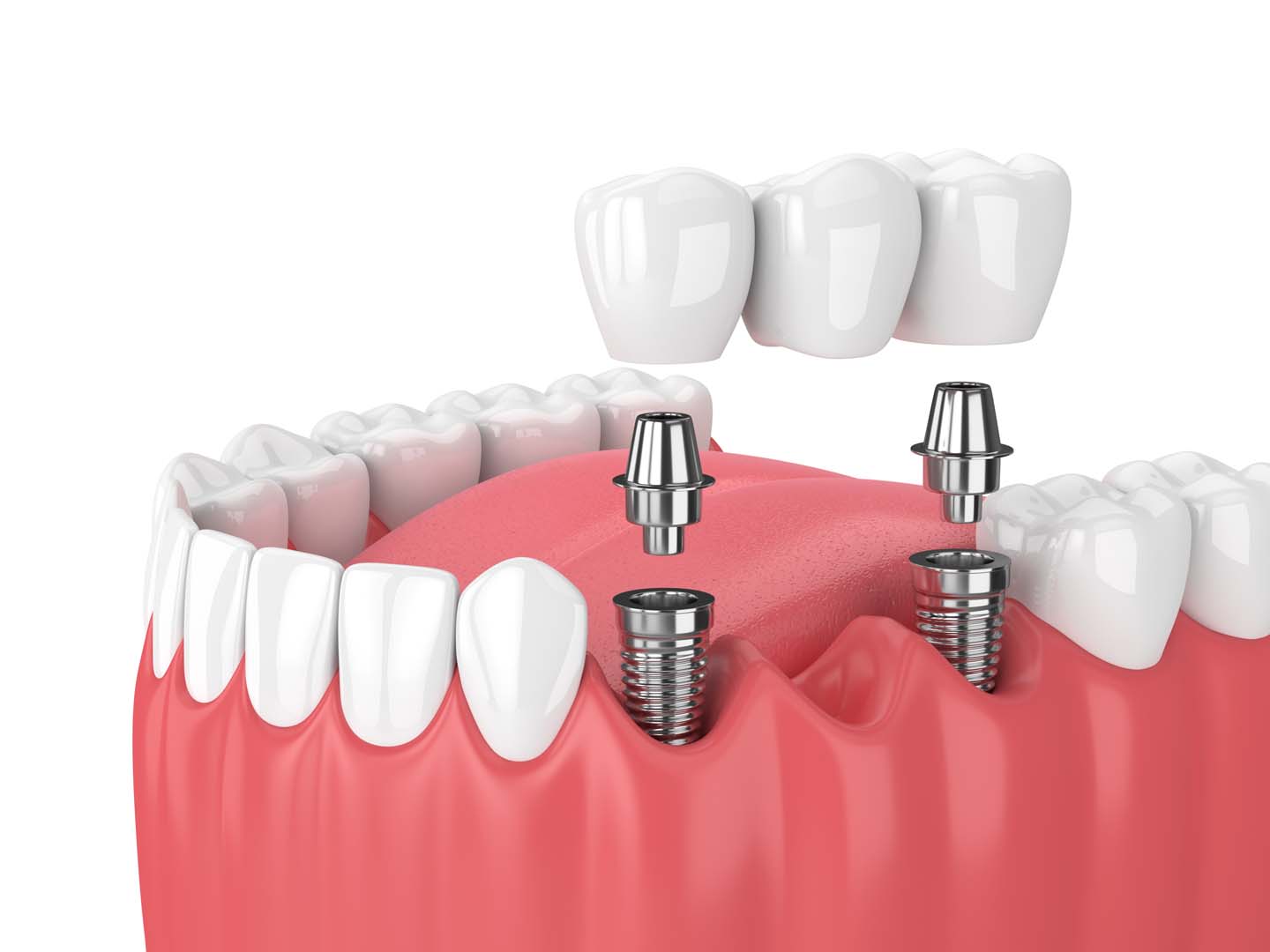
Dental implants replace a missing tooth root with a titanium post set in the jawbone. Once the bone heals around it, the post holds a crown, a bridge or a full-arch denture. At Kidder Owens Dental in Baton Rouge, Dr. Sean Owens plans each implant on a 3D scan before placing it, and the same team restores it.
What Are Dental Implants?
An implant has three parts. The post sits in the bone where the root used to be. An abutment connects the post to the tooth. The visible tooth on top is a custom crown, bridge or denture. Over a few months the bone fuses to the post, a process called osseointegration, and that bond is what lets an implant take chewing force the way a natural root does.
Because the post sits in the jaw, it also gives the bone something to work against. Bone where a tooth is missing tends to shrink over time. An implant may help slow that loss, which is one reason dentists often suggest one sooner rather than later after a tooth is lost.
Which Implant Option Fits Your Case?
The number of missing teeth, and where they are, decides most of the plan. This table shows how the options at our office line up.
| Situation | Usual option | Implants involved | Fixed or removable |
|---|---|---|---|
| One missing tooth | Single implant with a ceramic crown | One | Fixed |
| Two or more missing teeth in a row | Implant-supported bridge | Usually two, one at each end | Fixed |
| Most or all teeth missing in one arch | All-on-4 full-arch teeth | Four per arch | Fixed |
| Most or all teeth missing, or a loose denture | Implant-supported dentures | Two to six per arch | Fixed or snap-in removable |
Single Tooth Implants in Baton Rouge
A single implant replaces one tooth without touching the teeth beside it. A traditional bridge needs the neighbouring teeth filed down for crowns. An implant leaves them alone. The crown on top is made by local ceramists who shape and shade it to match the teeth around it, and Dr. Owens seats it here.
For a step-by-step look at one tooth from scan to crown, read what a single tooth implant actually involves.
Implant-Supported Bridges
When several teeth in a row are gone, two implants can carry a bridge across the gap. Natural teeth don’t have to anchor it. Read more about the bridge types we use on our dental bridges page.
Full-Arch Options: All-on-4 and Implant-Supported Dentures
For a full arch, All-on-4 uses four implants, two of them angled, to hold a fixed set of teeth. A temporary fixed set is usually attached the same day. Implant-supported dentures use two to six implants and can be fixed or snap in and out for cleaning. If you’re weighing the two, our guide to All-on-4 vs. implant-supported dentures walks through the trade-offs. Patients with wide-scale damage across many teeth may need a full mouth reconstruction that combines implants with crowns and other repairs.
Am I a Candidate for Dental Implants?
Most healthy adults are. The two things that matter most are healthy gums and enough bone to hold the post. A short exam and a 3D scan answer both at the first visit.
- You’re missing one or more teeth, or have a tooth that can’t be saved.
- Your gums are healthy, or gum disease can be treated first.
- There’s enough jawbone at the site, or it can be rebuilt with grafting.
- You’re willing to keep up brushing, flossing and regular checkups.
What If I Don’t Have Enough Bone?
Bone often shrinks where a tooth has been missing for a while. A bone graft, ridge augmentation or sinus lift may rebuild the site so an implant can be placed. A graft usually needs three to six months to mature first. Our article Do you need a bone graft before dental implants? covers how that call gets made.
Smoking and Health Conditions
Smoking and some medical conditions, such as uncontrolled diabetes, can slow healing and raise the chance an implant doesn’t fuse. They don’t always rule implants out. Dr. Owens will talk through your health history and what can be done before surgery to give the implant a better chance.
How Does the Dental Implant Process Work?
- Consultation and 3D scan. We examine the area and take a 3D scan that maps the bone and nerves. You get a written plan and estimate before anything is scheduled.
- Extraction or grafting, if needed. A damaged tooth comes out first. If the site is thin, it’s grafted and given time to heal.
- Implant placement. Dr. Owens places the post using the 3D plan, usually in a single appointment. The area is fully numbed, and sedation is available.
- Healing. The bone fuses to the implant over three to six months. A temporary tooth is provided so you aren’t left with a visible gap.
- Abutment and final tooth. Once healed, the abutment goes on and your custom crown, bridge or denture is attached and checked for fit and bite.
Some patients can have a tooth removed and an implant placed in the same visit. Whether that’s safe depends on the bone and the infection at the site. Read same-day dental implants: who qualifies and who should wait.
What Is Recovery Like After Implant Surgery?
Most people go back to normal routines within a few days. Expect some soreness and swelling for the first couple of days, which is usually mild and handled with the instructions we send home with you. Stick to soft foods and avoid chewing on the implant side while it heals.
The longer part of recovery happens out of sight. The bone takes three to six months to bond with the post, and we check in during that time. For patients who need extra healing support, PRP therapy may be part of the plan.
How Much Do Dental Implants Cost in Baton Rouge?
The cost depends on what your case needs. A single implant with a crown is priced differently from a full arch. Extractions, grafting and the type of final tooth all change the number. That’s why we don’t quote a price before an exam. At your consultation you’ll get a written estimate based on your 3D scan.
We accept most major dental insurance plans. If you’d like to spread the cost out, monthly payment options are available through Cherry, and patients without insurance can ask about our in-house membership plans. To compare long-term value against other options, see dental implants vs. dentures vs. bridges.
Who Places Dental Implants at Kidder Owens Dental?
Dr. Sean Owens, DDS, places and restores implants at our office on Perkins Road. He completed a 300-hour implant externship through Stony Brook University and Dental XP and is a Fellow of the International Congress of Oral Implantologists. He is sedation trained, which matters for patients who are anxious or have complex cases. Sedation options are available at every stage. Read more about our team on the meet the doctors page.
Planning, surgery and the final crown all happen with one team, so the person who placed your implant knows exactly how it should be restored.